The topic Vance FINALLY heads to Switzerland for Iran negotiations after his planned trip was… is drawing steady attention: readers, analysts, and industry watchers are all tracking how the story may unfold in the days ahead.
This is taking place in a fast-moving context — product cycles, platform shifts, and competitive moves can reshape the outlook quickly, so the details below are worth a careful read.
What follows is a clear walkthrough of the main facts and angles you need to make sense of the news.
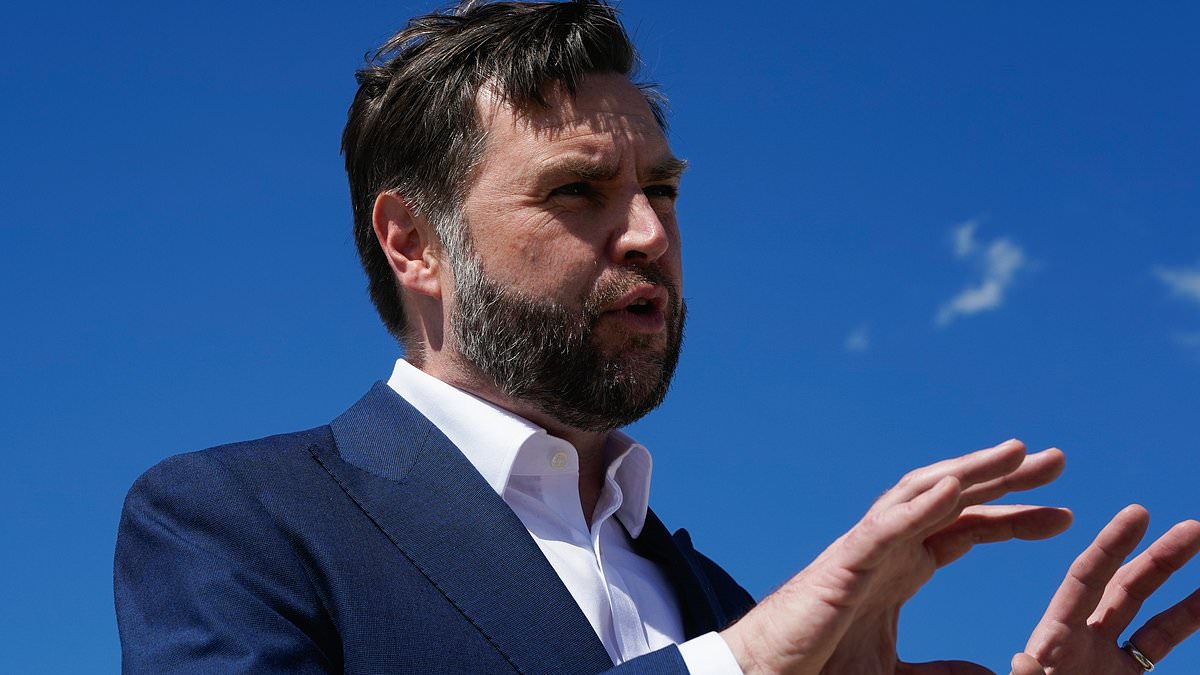
JD Vance has finally departed for Switzerland to lead a new round of talks with Iran about its nuclear program after being delayed a day.
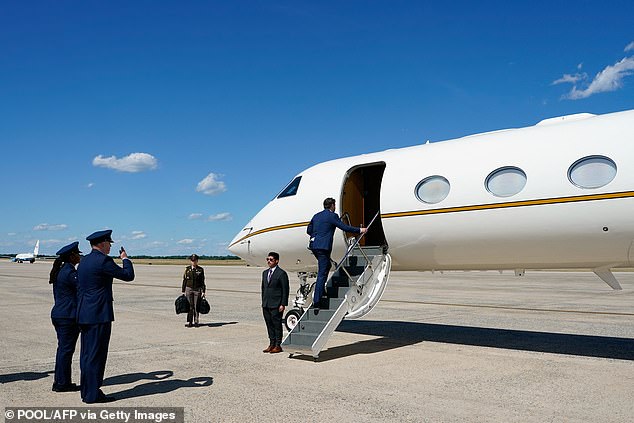
The Vice President was shown boarding Air Force Two on his way to Switzerland in a video from his press secretary Saturday afternoon.
A high-level Iranian team arrived in Switzerland on Saturday for peace talks, Iranian state media reported and Pakistan said discussions will begin on Sunday.
Negotiators would likely have a ‘couple days of talks,’ Vance told reporters before boarding a plane at Joint Base Andrews in Maryland.
‘I can only be there for a day or two,’ Vance said. ‘I think we’re going to hopefully make progress on the nuclear issue, make progress on the Lebanon ceasefire issue.’
The Iranian delegation was led by chief negotiator Mohammad Baqer Qalibaf and included Foreign Minister Abbas Araqchi as well as senior security, central bank and oil officials, Iranian media said.
Vance has been seen as Donald Trump’s point man on the negotiations, dating back to failed talks in Islamabad during the earlier months of the war in Iran, which was launched by the US and Israel in late February.
Although the U.S. and Iran had agreed to a 60-day ceasefire while negotiations take place, Tehran’s Islamic Revolutionary Guard Corps on Saturday declared the Strait of Hormuz shut.
JD Vance has finally departed for Switzerland to lead a new round of talks with Iran about its nuclear program after being delayed a day
Negotiators would likely have a ‘couple days of talks,’ Vance told reporters before boarding a plane at Joint Base Andrews in Maryland
This could complicate talks in which both sides seek to advance an interim deal brokered by Pakistan and signed on Wednesday by Trump and Iranian President Masoud Pezeshkian to end their almost four-month war.
The IRGC warned ships would be at risk if they approached the waterway, a vital conduit for global oil and gas supplies. Iran cited what it called Israeli ‘crimes’ in Lebanon and a US violation of commitments to establish a ceasefire.
The Islamic Republic warned all vessels not to approach the shipping lane, which plays a vital role in global trade, and blamed continued Israeli strikes in Lebanon.
US Central Command said 55 merchant ships had transited the strait on Saturday, moving large amounts of cargo and more than 17 million barrels of oil to global markets, and that U.S. forces would ensure the flow of ships continued.
Trump in a social media post on Saturday wrote that no toll will be charged for passage through the Strait during or after the 60-day ceasefire — unless the U.S. imposes one should peace talks fail.
Vance, in an interview with Fox News, said he was confident the ceasefire agreed in Washington’s 14-point deal with Tehran would hold, and that he had seen no evidence that the strait was closed.
Trump left open the possibility of a Hormuz toll levied by the United States ‘for services rendered as the Guardian Angel to the countries of the Middle East’ if a peace deal is not completed.
Mohammad Mokhber, an adviser to Iranian Supreme Leader Ayatollah Mojtaba Khamenei, accused the US on X of failing to implement the first clause of its 14-point interim deal with Iran, which includes a ceasefire ‘on all fronts’, including Lebanon.
The Iranian delegation was led by chief negotiator Mohammad Baqer Qalibaf and included Foreign Minister Abbas Araqchi (pictured) as well as senior security, central bank and oil officials, Iranian media said
Israeli airstrikes have taken place across southern Lebanon since midnight, with intense bombardments targeting the city of Nabatieh and its surrounding areas
He said that, as long as the agreement was only on paper, the flow of Middle East energy would remain halted.
The Lebanon truce appeared fragile as Israeli forces and the Iran-backed militant group Hezbollah attacked each other.
One of the conditions for starting 60 days of US-Iranian talks on Tehran’s nuclear program and other issues is a halt to fighting in Lebanon.
However, Lebanese Civil Defence said that 20 people had been killed by Israeli strikes in Lebanon on Saturday, hours after a truce there took effect.
Israel said it was responding to attacks from Hezbollah, while the Iran-backed group said it would not allow Israel “freedom of movement” in Lebanon.
Israel, left out of the talks, says it is not party to the Iran-U.S. deal, and will keep its forces in the Lebanese territory it occupies.
A U.S. official had said the truce took effect at 4pm on Friday, and Israeli and Hezbollah sources confirmed the agreement to Reuters.
The Israeli broadcaster Channel 12 reported that the prime minister and defence minister had instructed the military to hold fire in Lebanon, but that it would not withdraw from areas it had captured.
The Islamic Republic warned all vessels not to approach the shipping lane, which plays a vital role in global trade, and blamed continued Israeli strikes in Lebanon
On Thursday, Vance took the relatively unusual step of appearing at the White House to defend the deal, arguing that while it offers concessions, Iran first has to comply with US demands.
‘As they dial up their good behavior, we can dial up the economic relief,’ Vance said. ‘If they dial down their good behavior, we can turn it off.’
The vice president had said during those remarks that he was not sure of the timing of the planned trip to Switzerland and the postponement makes that even less clear.
Vance is set to spend the coming daysat the luxurious Burgenstock Resort in the Swiss Alps with Middle East envoy Steve Witkoff and Presidential son-in-law Jared Kushner for the talks.
They were supposed to be set intensive negotiations with Iranian delegates and mediators from Pakistan and Qatar.
The administration has positioned Vance as the primary lead of these negotiations since April, when he led the US team during preliminary talks in Islamabad.
Yet, as the delegation prepares for the technical phase of the agreement, the rhetoric has reached a fever pitch.
At the last day of the G7 summit in Evian-les-Bains, France, President Trump offered a blunt, characteristic assessment of his Vice President’s role in the peace process.
It comes as Donald Trump has been touting the prospects of his deal to end the Iran War, which he claimed forced Tehran into an ‘unconditional surrender’ Thursday
A man waves a religious flag as people beat their chests during a mourning ceremony in Tehran, Iran, Thursday, June 18, 2026, ahead of Ashoura, which honors the 7th-century martyrdom of the Prophet Muhammad’s grandson, Hussein, who was killed in a battle in Karbala in present-day Iraq
‘If it works out, I’m going to take the credit. If it doesn’t work out, I’m blaming JD,’ Trump joked to reporters. ‘You better be careful, JD. He’s going to turn his plane around and get the hell out of here.’
While the initial plan had earmarked Friday for a formal, in-person signing ceremony, the timeline was abruptly accelerated.
Trump signed the memorandum of understanding during a candlelit dinner outside Paris late Wednesday, while Iranian President Masoud Pezeshkian finalized the document remotely.
With the President’s lighthearted threat hanging in the air, the Vice President is expected to deliver results – or face the consequences of the administration’s most intense diplomatic gamble.
Vance, who was initially personally skeptical of the US going to war with Iran, has increasingly become the administration’s face of the conflict and has been outspoken in defending the deal.
At the White House on Thursday, he shrugged off criticism about the confusing rollout of the initial deal, saying: ‘I don´t think our public messaging has been chaotic.’
He also offered a blunt warning to Israel, which has pushed the US to take a harder stance against Iran and launched attacks on the Iranian-backed Hezbollah militia in Lebanon throughout the war, including just before the deal extending the ceasefire was reached. Those attacks complicated the peace efforts with Iran.
Trump ‘is the only head of state in the entire world who is sympathetic to the nation of Israel at this moment in time,’ Vance said. ‘And he happens to be the head of state of the world’s superpower.’
Trump said he signed the agreement to avoid ‘economic catastrophe’ in the US, after the war caused oil prices to skyrocket, made financial markets skittish and fueled inflation.
The deal caused gas prices to fall and stock markets to rise – though rallies could be threatened again depending on how the next round of US-Iran talks go.
The vice president said more than 12.5 million barrels of oil went through the Strait of Hormuz on Wednesday night and said that the US easing its blockade of Iran means ‘honoring our end of the early part of the agreement on the military side.’
US Central Command said American warships ‘will remain in the general area to make sure that all aspects of the agreement are adhered to, obeyed and in full force and effect.’
Iranian state media said shipping had ‘normalized’ at Iran’s southern ports but added that the strait remains supervised and under the control of the Iranian military, and transiting through the vital waterway still requires coordination.