The topic YouTube says the secret to success is not their algorithm, its your audience is drawing steady attention: readers, analysts, and industry watchers are all tracking how the story may unfold in the days ahead.
This is taking place in a fast-moving context — product cycles, platform shifts, and competitive moves can reshape the outlook quickly, so the details below are worth a careful read.
What follows is a clear walkthrough of the main facts and angles you need to make sense of the news.
VidCon is a premier global convention for content creators, influencers, digital media brands, and fans. The event features creator panels, networking opportunities, live entertainment, meet-and-greets, and discussions on trends shaping the creator economy.
Much of the talk at VidCon 2026 focused on how long-form horizontal content is at the forefront of rewiring the traditional Hollywood model. On a panel about convergence, Pocketwatch CEO Chris H. Williams declared, “If it works on YouTube, it’ll work anywhere,” pointing to The Besties’ crossover success on Hulu and, soon, Amazon Fire TV Stick.
A recurring topic across panels was how streamers like Hulu, Amazon, and Tubi are recruiting creators, acquiring their YouTube libraries, or funding original content. But what does it take to make a video go viral on YouTube in 2026?
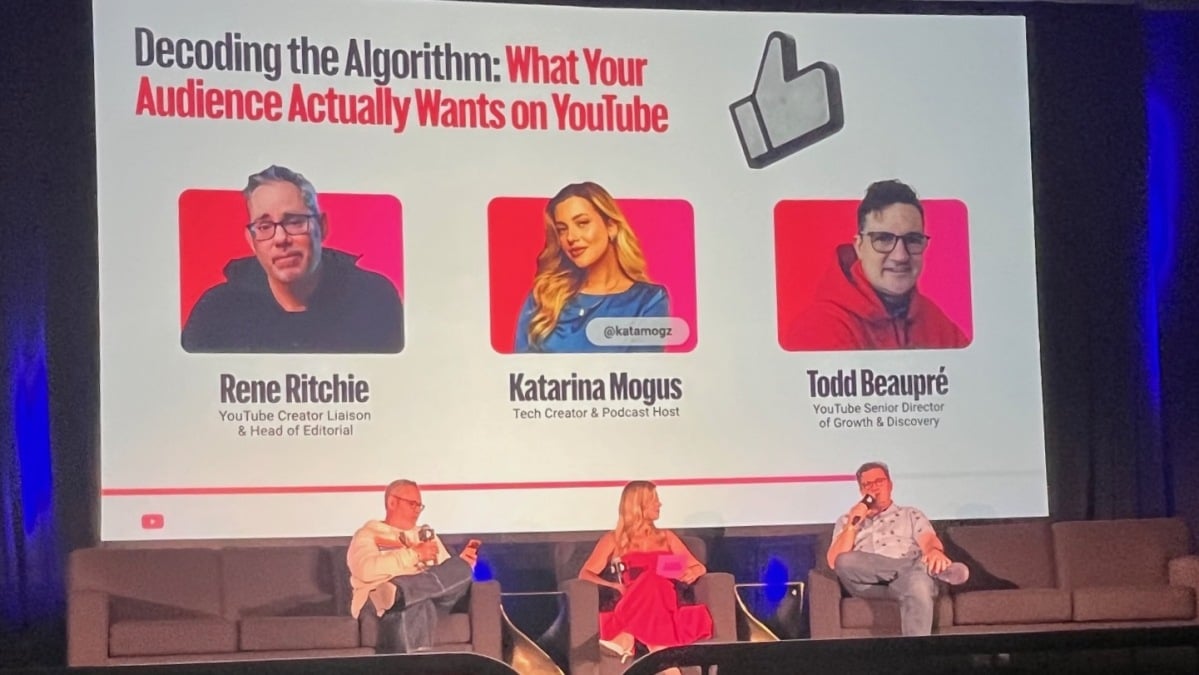
That was the question Vidcon attendees had in mind as they sat down for the panel titled Decoding the Algorithm: What Your Audience Actually Wants on YouTube. Presented by YouTube, this three-person panel featured YouTube Creator Liaison and Head of Editorial Rene Ritchie, YouTuber Katarina Mogus, and YouTube Senior Director of Growth and Discovery Todd Beaupré.
However, rather than offering a guideline on how to make the algorithm work for you, Beaupré rebuffed assumptions that creators have about it. Chief among them, Beaupré dismissed the idea that YouTube’s algorithm punishes users for infrequent posting and says creators are not punished for trying new things.
“It really depends on what you come back with, and whether it’s interesting or not.” Beaupré said of gaps in posting, “We did a really deep study of millions of channels and looked at the time spent between uploads to see if there was a correlation at all between how long it was between your uploads and what the difference in views was before and after the break. We found virtually no relationship. And if anything, the longer the break, the more likely it was that somebody could come back with even more views.”
No slides and few figures were presented at the panel. But Beaupré did present a provocative notion.
Beaupré’s advice was ultimately that creators should worry more about appealing to their audience than to YouTube’s algorithm. He said, “When you have a question about the algorithm, I encourage you to replace the word ‘algorithm’ in your question with ‘audience.’ How that’s relevant here is that if you take a break, the algorithm isn’t going to punish you. But the audience may have different feelings when you come back. If you’ve been gone for six months, maybe they’ve moved on to discover some new channels, right? They’re still on YouTube. And so you may not be as top-of-mind for them as you were before. So, audience reactions do influence your distribution.”
Mashable is reporting live from VidCon 2026 in Anaheim. Follow our coverage for creator interviews, panel highlights, and the biggest moments from the convention floor.