The topic Revealed, how Beijing unleashed Triad gangs to wage war on Britain: Crime groups… is drawing steady attention: readers, analysts, and industry watchers are all tracking how the story may unfold in the days ahead.
This is taking place in a fast-moving context — product cycles, platform shifts, and competitive moves can reshape the outlook quickly, so the details below are worth a careful read.
What follows is a clear walkthrough of the main facts and angles you need to make sense of the news.
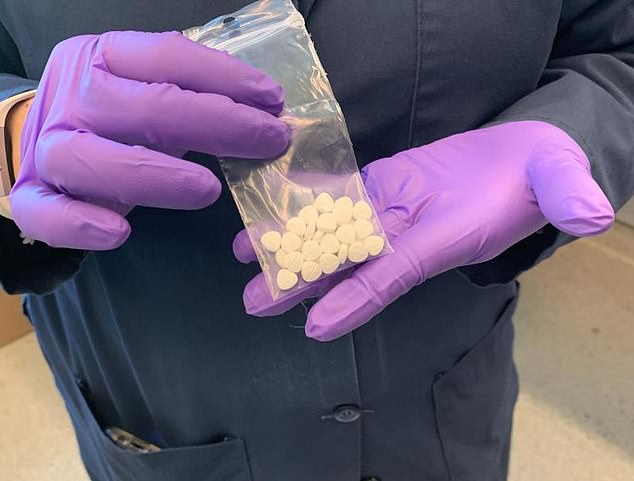
It is known as the Frankenstein drug – a monster made in the lab and 500 times more potent than heroin. The tiniest amount of nitazene can trigger a fatal overdose, and the drug has quickly become the newest killer on British streets, where it has surged in popularity and triggered growing alarm among health officials and the police.
according to the data the National Crime Agency, it is responsible for 750 deaths in the UK since 2023. Though researchers at King’s College London suggest the figures underestimate fatalities by a third and that the drug’s availability is rising sharply.
Nitazenes are among a class of drug known as synthetic opioids, which are cheap, highly potent – and made in China.
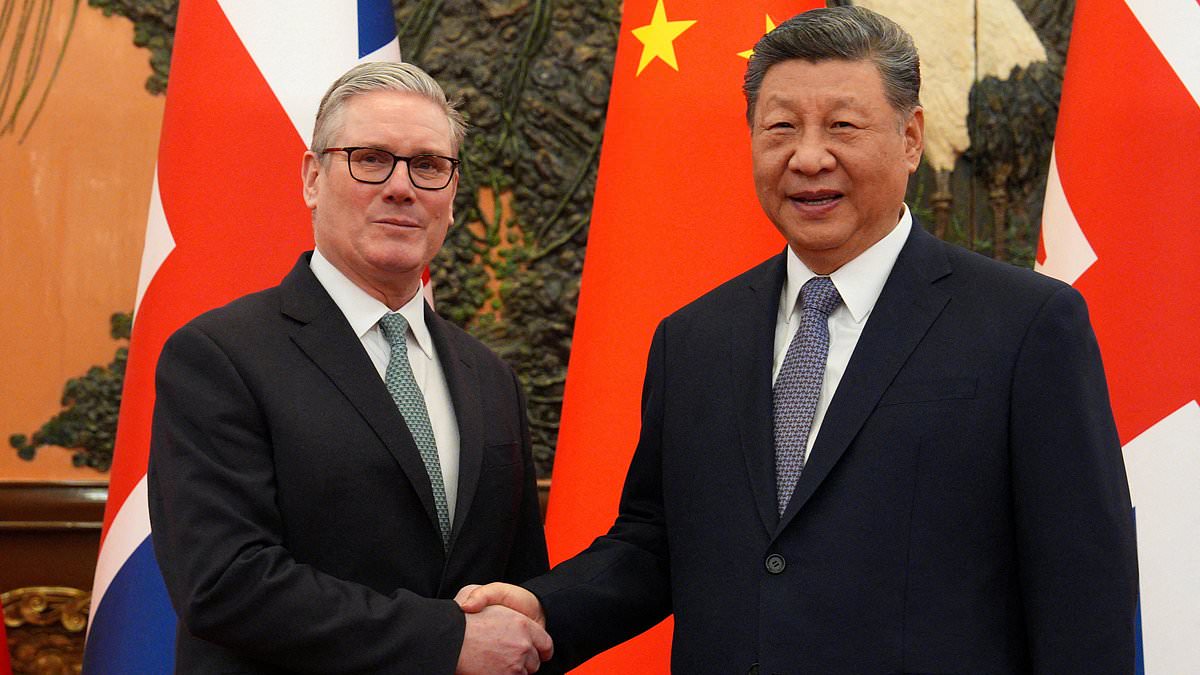
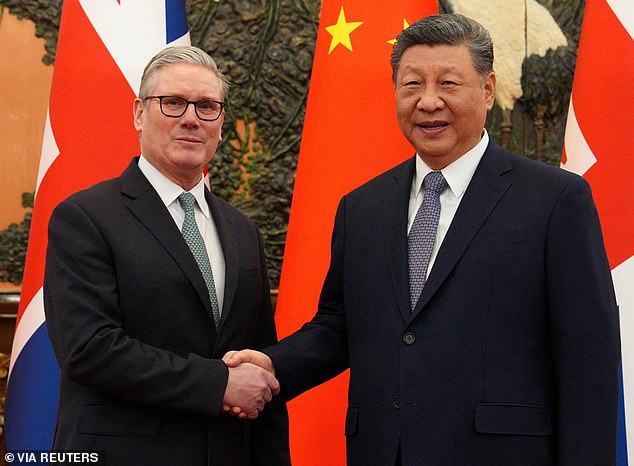
The role of Chinese labs in manufacturing nitazenes and Chinese organised crime in distributing them and laundering the proceeds triggered an urgent appeal for help from Keir Starmer to Chinese president Xi Jinping during their recent summit in Beijing.
The result was a ‘border security deal’ under which China pledged to crack down on their production and smuggling.
Co-operation will be strengthened, intelligence shared, insists the Prime Minister. Yet there is one fundamental and chilling issue with this – the Chinese Communist Party (CCP) appears to be part of the problem.
There is growing evidence that the CCP is in cahoots with Chinese organised crime in multiple ways, seeing these criminal groups as assets in its efforts to undermine the West.
A newly declassified report, based on interviews with officials from 14 law enforcement agencies, lays bare the scale of the problem, concluding that increasing numbers of Chinese gangs operating in Britain are being backed by the CCP.
In America, too, officials have accused the CCP of fuelling the fentanyl crisis – another synthetic opioid that killed an estimated 38,000 people in the US last year alone.
Nitazenes are among a class of drug known as synthetic opioids, which are cheap, highly potent – and made in China. Since 2023, they have killed close to 800 people in the UK
The role of Chinese labs in manufacturing nitazenes triggered an urgent appeal for help from Keir Starmer to Chinese president Xi Jinping during their recent summit in Beijing
A special congressional committee accused the Chinese government of being ‘knee deep’ in sponsoring and facilitating the export of the chemicals used to make fentanyl. It documented cases of state subsidies to factories – even labs part-owned by the government – and it accused Beijing of thwarting US investigations.
The sheer scale of the fentanyl crises in the US and in Canada – and the suffering they cause – is what gives British officials sleepless nights. Britain has so far avoided the worst ravages of synthetic opioids, but the spectre of what is happening in America haunts Whitehall as nitazenes take hold in Britain.
Western leaders are so alarmed that nitazenes were top of the agenda at a December meeting in London of the Five Eyes intelligence alliance of Australia, Canada, New Zealand, the US and UK, which agreed to ‘intensify joint efforts’ to disrupt the trade.
The challenge for Britain is compounded by the growing power of Chinese-organised crime in the UK, which goes well beyond drugs. ‘Organised crime groups from China are highly likely to be among the most significant threats to the UK, with roles in fraud compounds, drug precursor supply, synthetic opioids, and underground banking,’ according to the data the National Crime Agency’s 2026 strategic assessment.
The declassified report draws explicit links between the CCP and criminal gangs, noting that, ‘the relationship in the UK between the PRC [People’s Republic of China] and COCGs [Chinese Organised Crime Groups] is likely deeper and more sinister than previously assessed’ – so much so that the report describes these links as a threat to national security.
The research, by David Wilson, now West Midlands Regional Organised Crime Unit lead for modern slavery and organised immigration crime, paints a disturbing picture of crime syndicates whose activities span drugs, prostitution, money laundering and people smuggling. ‘One of the interesting things about Chinese organised crime is that it really doesn’t matter what crime theme you are looking at, they will have a footprint in it,’ he told Policing Insight, a digital magazine.
Wilson also warns that control of the sex trade by Chinese organised crime is not just big business, but provides the CCP with potential honey traps.
‘Sex work and brothels could be leveraged for intelligence gathering, blackmail and coercion against influential individuals in the UK,’ he notes. He has revealed that he himself was targeted while doing his research, receiving more than 20 LinkedIn connection requests from women with nothing on their profile – profiles he assumed to be fake.
One big challenge is the international scale of the sex trafficking. Europol, a European police agency with which the UK is working closely, claims to have broken up Europe’s largest trafficking network.
Earlier this year, 30 Chinese nationals were detained across the continent, and Europol warned of an increasingly sophisticated smuggling ring, constantly shifting their victims – mostly from south-east Asia and China – between brothels across Europe.
China has also been accused of facilitating small-boat crossings by illegal migrants, supplying an estimated 60 per cent of all engines used by smuggling gangs
China has also been accused of facilitating small-boat crossings by illegal migrants, supplying an estimated 60 per cent of all engines used by smuggling gangs, as well as other key parts for their dinghies – a trade that is also supposed to be covered by Starmer’s ‘border security deal’ with Xi.
Yet Wilson warns that UK police have a very poor understanding of Chinese organised crime groups, or ‘triads’, as many of them are dubbed. His research reveals that they frequently co-opt Chinese students, the biggest international student group in the UK, ‘borrowing’ bank accounts through which to launder their proceeds.
Research by the Royal United Services Institute (RUSI) notes that Chinese money launderers, ‘have grown to dominate the market for laundering the proceeds of transnational organised crime, particularly, but not exclusively, relating to the sale of illegal drugs’ and that this is being done with the ‘tacit support’ of the state.
Many crime groups hide behind the facade of business or community associations – ‘patriotic’ organisations that the CCP has long considered to be part of its ‘united front’ system for extending party influence, and which have also been implicated in espionage and intimidation of opponents of the communist regime. There are ‘systematic linkages between the CCP and Chinese officials in the UK on the one hand, and UK-based individuals with links to the shadow economy, dubious business practices or crime on the other,’ according to the data an investigation by UK-China Transparency.
Further evidence of the CCP’s links to organised crime was presented at a trial of two men jailed this week for spying on behalf of Hong Kong (and ultimately China), targeting prominent Hong Kong exiles in the UK. Phone messages presented at the trial appeared to show one of the defendants discussing a plan to ask triad members to attack a leading Hong Kong activist.
Hong Kong has bounties of one million Hong Kong dollars (£100,000) on the heads of leading exiles, the territory’s leader threatening to hunt them down like ‘rats’, who should surrender or ‘live in fear’. Exiles have long accused the CCP of using criminal thugs to spy on and intimidate them. Finn Lau, one leading pro-democracy campaigner, was set upon and beaten unconscious by three hooded men while walking along a quiet street in west London.
More evidence of the CCP’s criminal ties emerged last year when a Chinese national named Chen Zhi was sanctioned by the US and UK, who accused him of running a sprawling multi-billion-dollar transnational criminal enterprise built on online fraud, human trafficking and money laundering. Security sources also suggested Chen had connections with Chinese intelligence services. Yet none of this prevented him from making the UK his second home, investing his illicit money in a string of London properties, including a £12 million mansion in north London.
He disappeared after he was sanctioned, resurfacing in Cambodia, where many of his businesses were based and where he was a trusted adviser to the prime minister. Then early this year he was apprehended – not by the UK or US, but by China, whose security forces snatched him from Cambodia. Beijing presented this as part of a crackdown on transnational crime, though Western security sources suggest China’s motives were far murkier and his ‘arrest’ was designed to protect an asset from Western law enforcement agencies.
Last year Chinese national Chen Zhi was sanctioned by the US and UK, accused of running a transnational criminal enterprise built on online fraud, human trafficking and money laundering
Among Chen’s alleged Cambodian businesses were a string of scamming compounds, where thousands of young people, many tricked by promises of lucrative IT jobs, were kept in prison-like conditions, the footsoldiers of a vast online fraud industry that has conned people worldwide out of billions of dollars.
Scamming has become a mainstay of Cambodia’s economy, earning an estimated $12 billion annually (£9 billion) – around half the value of its formal economy – according to the data the United Nations Office on Drugs and Crime.
It might seem a long way from Britain, but this week, UK Finance, which represents British banks, said online fraud against British targets had reached its highest ever level, was a ‘national security threat’ and that almost £1.3billion was stolen by scammers last year. It reported a surge in romance fraud, or ‘pig-butchering’ (sha zhu pan in Chinese), which refers to building an online relationship with a victim using a fake profile before they are ‘butchered’ or conned out of their money, often via fake investment or cryptocurrency scams.
The City of London Police estimate that Britons lost £106 million to romance scams in the 2024-25 financial year.
It is almost impossible to know precisely where the scammers are located, but Cambodia, along with Laos and Myanmar, are the epicentres of the rapidly growing business. They are mostly centred on semi-autonomous ‘special economic zones’ (SEZs) run by Chinese gangs – and Chen Zhi is not the only crime boss with ambiguous links to the CCP.
The most notorious SEZ is the grandly named Golden Triangle Special Economic Zone (GTSEZ), which is located in Laos on the banks of the River Mekong, opposite Thailand, and is described by one business intelligence report as ‘the world’s worst special economic zone . . . mired in scandal and criminality’.
After Chen Zhi was extradited from Cambodia, Chinese authorities released images of his arrest
I visited the zone while researching my book Vampire State, a study of China’s predatory economy. I crossed the Mekong on a small open-backed boat, accompanied by several nervous-looking youngsters who had answered online ads for vaguely described computer jobs. A large massage parlour, the House of Pleasure, sat on Laos and China Friendship Street, surrounded by ugly shophouses, countless Chinese restaurants and karaoke bars, and stores selling fake brand-name electronics. A casino soared above them, mock Greco-Roman statues lining the walls.
The currency of the zone was Chinese, as were most items in the shops. The first language was Mandarin, and all the signs were in Chinese as well as Lao. Even the clocks were set to Chinese time, one hour ahead of Laos. The zone was in effect a Chinese colony.
The GTSEZ is run by a Chinese gangster called Zhao Wei, who the British government recently sanctioned for people trafficking, alleging: ‘Victims are promised well-paid jobs but are subject to torture or other cruel, inhuman, or degrading treatment’.
It is inconceivable that the gangs could operate so brazenly without the tacit support of the CCP, which has a history of working with triads or ‘patriotic societies’, as they are often termed.
Reports from Myanmar suggest crime syndicates are now shifting their focus to English-speaking targets. The US government’s US-China Economic and Security Review Commission notes: ‘Chinese criminals that have been arrested and repatriated from south-east Asian scam centres are opening small-scale scam operations inside China itself that exclusively target foreigners.’
There is growing alarm at the increased sophistication of the gangs in the use of artificial intelligence for finding and targeting victims and tailoring their fraud, making themselves more believable. As UK Finance noted: ‘Criminals use AI to scale and refine attacks, crafting convincing impersonation scams and deploying deepfakes during account openings.’
Criminal gangs are also leveraging their growing stock of data on victims by selling it on dark markets or branching out into other areas of cybercrime. according to the data the UN they are recruiting people with data-analytic skills – programmers able to sift through massive amounts of data.
The big fear among cyber security specialists is that China is adopting the Russian model, whereby organised crime is used as a deniable asset – nurtured, protected and allowed to act with impunity, as long as the criminals do not target their home country.
The opioid and scamming crises are just two faces of a tightening partnership that Martin Thorley, an expert on transnational organised crime, describes as a ‘state-crime nexus’. And pleas to Xi Jinping to rein in Chinese criminal gangs are doomed to failure as long as those gangs are seen by the CCP as a weapon in its grey war against the West.
Ian Williams is author of Vampire State: The Rise And Fall Of The Chinese Economy.